
























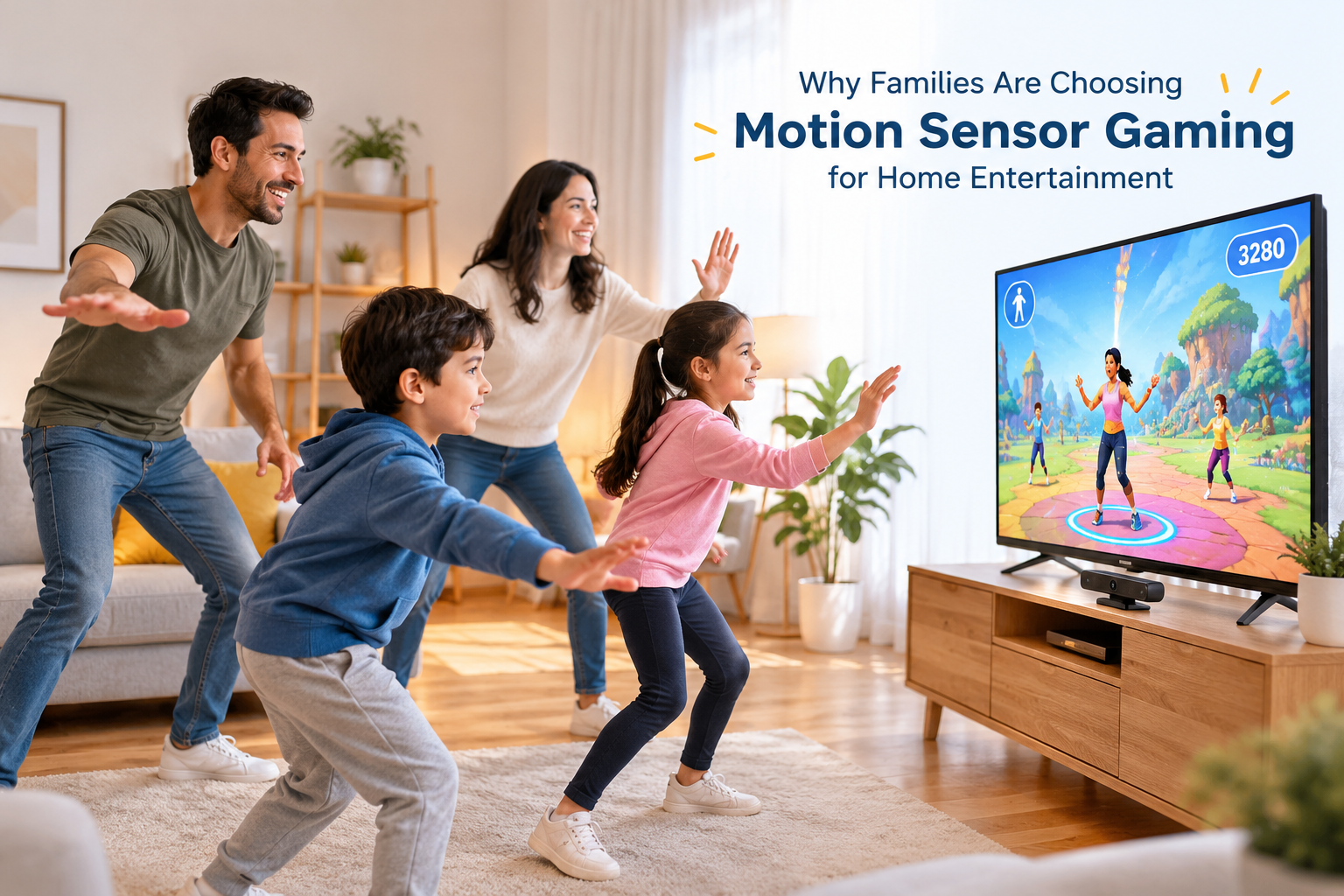
Finding activities that the whole family enjoys can sometimes be difficult. Children may want to play video games, parents may prefer activities that involve movement, and everyone has a different idea of how to spend free time at home. As a result, many families are exploring new ways to make home entertainment more enjoyable and interactive.
One option gaining attention is motion-based gaming. Unlike traditional games that mainly use buttons or joysticks, these games allow players to control actions through body movements. Players may need to dance, jump, stretch, or move in different directions to participate in a game.
This approach brings a new experience to indoor entertainment. It gives family members an opportunity to play together, enjoy friendly competition, and add movement to their free time. But what makes this type of gaming appealing to families, and is it worth considering for your home? Let’s explore.
What Is Motion Sensor Gaming?
Motion sensor gaming is a type of interactive gaming that uses sensors or motion-tracking technology to detect a player’s movements. Depending on the system, the technology may track body movements, gestures, or the position of a controller.
Instead of relying only on traditional controls, players use physical actions to interact with the game. For example, they might move their arms to follow dance steps, step sideways to avoid virtual obstacles, or copy movements displayed on the screen.
A motion gaming console can make these activities accessible from home, allowing families to enjoy interactive games without always needing to visit a gaming centre or entertainment venue. The exact experience depends on the console, its sensors, and the games it supports. Therefore, it is useful to check the available features before choosing a system for your family.
Why Are Families Choosing Motion Sensor Gaming for Home Entertainment?
1. It Makes Gaming More Active
One of the main reasons families explore motion-based gaming is that it adds physical movement to screen time. Traditional video games often involve sitting in one place and using a controller. Motion-based games can encourage players to stand, move their arms, bend, dance, or step in different directions.
For example, a family could enjoy a dance challenge after dinner or try a movement-based game on a weekend afternoon. These activities can make indoor entertainment feel more energetic. Although this type of gaming should not replace regular exercise or outdoor play, it can be a fun way to introduce movement into family activities.
2. It Brings Parents and Children Together
Busy schedules can make it difficult for families to find time for activities everyone enjoys. Interactive gaming offers a simple way to spend time together without planning a complicated outing. Parents can join their children, take turns playing, or participate in friendly challenges. These shared moments can lead to laughter, conversations, and enjoyable family memories.
For example, parents and children could compete to complete a game or work together to reach a common goal. The focus does not need to be on winning. Simply participating can make the experience enjoyable.
When gaming becomes a shared activity rather than something each family member does alone, it can help create stronger connections at home.
3. It Offers an Alternative to Passive Screen Time
Children often spend time watching videos, browsing content, or playing games while sitting still. While not all screen time is harmful, families may want to introduce more variety into their daily routines.
Motion-based gaming gives players a more active role. Instead of only watching what happens on a screen, they respond to instructions and use their movements to participate. This can make the experience feel different from watching television or playing a conventional video game.
Parents should still set reasonable screen-time limits and encourage children to enjoy other activities, including reading, creative play, and outdoor exercise. The goal is to create a healthy balance, not to replace one form of excessive screen time with another.
4. It Makes Indoor Entertainment More Enjoyable
Rainy days, extreme weather, and busy schedules can limit opportunities for outdoor activities. Families may sometimes struggle to find new ways to keep everyone entertained at home.
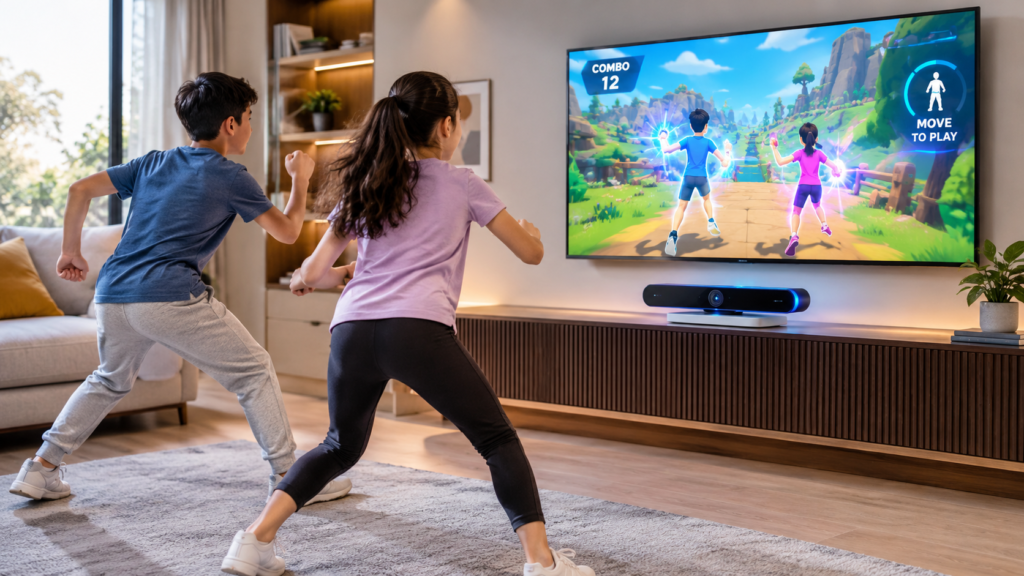
Interactive games can provide another option for these situations. Depending on the games available, family members might enjoy dancing, movement challenges, sports-style activities, or other interactive experiences.
This variety can help make weekends and family evenings more interesting. The best part is that families can often enjoy short gaming sessions without making extensive preparations. However, they should ensure that the playing area is clear and large enough for the movements involved.
5. It Encourages Friendly Competition
A little competition can make family activities more exciting. Motion-based games may include scores, timed challenges, or tasks that players need to complete.
Family members can take turns trying to achieve a target or challenge each other to improve their performance. Younger children may enjoy competing with siblings, while parents can participate to make the activity more engaging. These games can also provide opportunities to practise patience, follow rules, and handle both winning and losing.
Parents can keep the experience positive by celebrating participation and effort rather than focusing only on scores. This helps ensure that everyone feels comfortable joining in, regardless of their gaming experience.
6. It Can Suit Different Family Members
Not every family member enjoys the same type of entertainment. Some prefer puzzles, others enjoy sports, and children may have different interests from their parents. A gaming system with a suitable variety of activities can help bring these preferences together. Families can choose games based on age, comfort level, and personal interests.
For instance, younger children may prefer simple movement games, while older children and adults might enjoy more challenging activities. However, not every console offers the same game selection or multiplayer features. Families should review the supported games and age recommendations before purchasing a system.
7. It Creates Opportunities for Social Interaction
Gaming can also be a social activity. When family members play together, they communicate, encourage one another, and share the experience. Some games allow players to cooperate, while others involve taking turns or competing against each other. These activities can encourage teamwork and create opportunities for positive interaction.
Families can also invite friends or relatives to participate, provided the console supports the required number of players. This makes interactive gaming a possible addition to family gatherings, birthday celebrations, and casual get-togethers at home.
How to Choose the Right Motion Gaming System for Your Family
Before buying a console, consider how your family plans to use it. A little research can help you choose a system that offers suitable games and practical features.
Here are some important factors to check:
- Game selection: Look for activities that match the interests and ages of your family members.
- Ease of use: Choose a system that is simple to set up and operate.
- Movement tracking: Understand how the system detects movements and what space it requires.
- Multiplayer options: Check whether multiple family members can play together or take turns.
- Safety: Ensure there is enough room to move without hitting furniture or other objects.
- Cost and support: Compare the price, warranty, included games, and available customer support.
A game console with motion sensor technology may be a suitable choice for families looking for a more interactive style of home entertainment. However, its value depends on the quality of the games, the needs of the players, and how often the family will use it.
Final Thoughts
Home entertainment is changing as families look for activities that combine fun, interaction, and movement. Motion-based gaming offers an alternative to conventional gaming by allowing players to participate physically rather than relying only on buttons and controllers. From family challenges to active indoor play, these games can create opportunities to spend quality time together. They can also add variety to screen time when used in moderation and alongside other activities.
For families considering a new entertainment option, the best approach is to compare available systems, check their features, and choose games that everyone can enjoy. With the right setup and sensible limits, motion-based gaming can become a fun addition to family life.
Frequently Asked Questions (FAQs)
What is a motion sensor gaming console?
A motion sensor gaming console is a gaming system that uses sensors or motion-tracking technology to detect physical movements. Players can use gestures or body movements to control actions in compatible games.
Is motion sensor gaming suitable for families?
Yes, it can be suitable for families when the games are age-appropriate and the activities match each player’s abilities. It can provide an enjoyable way for parents and children to play together at home.
Can motion-based gaming help children stay active?
Motion-based games can encourage children to move, dance, stretch, or perform other physical actions. However, they should complement rather than replace regular exercise, outdoor play, and other physical activities.
Do motion sensor games require a lot of space?
The space required depends on the console and game. Families should check the manufacturer’s instructions, clear the surrounding area, and ensure that players can move safely without hitting furniture or other objects.
Can adults enjoy motion sensor gaming too?
Yes. Many movement-based games can be enjoyed by adults as well as children. Families can participate together, take turns, or enjoy friendly challenges depending on the games and console features.
How much time should children spend playing motion-based games?
There is no single ideal duration for every child. Parents should consider the child’s age, overall screen time, sleep, schoolwork, and physical activity. Short sessions with regular breaks can help maintain a balanced routine.
What should I check before buying a motion gaming console for families?
Check the available games, age suitability, movement-tracking technology, multiplayer options, space requirements, price, and warranty. These factors can help you decide whether the system suits your household.
Is motion sensor gaming better than traditional gaming?
Neither option is automatically better for every player. Motion-based gaming encourages physical participation, while traditional gaming may suit players who prefer controller-based experiences. The right choice depends on personal preferences, game selection, and how gaming fits into a balanced lifestyle.