






















Feeling tired all the time, getting dizzy quickly, or lacking energy even after proper sleep can sometimes be linked to low hemoglobin levels. Hemoglobin is one of the most important components of your blood because it carries oxygen from the lungs to every part of the body. When hemoglobin becomes low, the body receives less oxygen, which can make a person feel weak, tired, and mentally drained.
Many people search online for how to increase hemoglobin naturally because they want to improve their health without depending only on medicines. The good news is that in many mild to moderate cases, proper nutrition, better lifestyle habits, and correcting deficiencies can naturally support healthy hemoglobin production.
In this detailed article, you will learn:
- how to increase hemoglobin naturally
- how to increase hemoglobin levels
- best hemoglobin increase food
- causes of low hemoglobin
- daily habits that help
- foods to avoid
- when to see a doctor
What Is Hemoglobin?
Hemoglobin is a protein present inside red blood cells. It contains iron and gives blood its red color. Its primary role is to carry oxygen from your lungs to tissues and organs. It also helps carry carbon dioxide back to the lungs for removal.Without enough hemoglobin, your body struggles to get proper oxygen. This is why low hemoglobin often causes tiredness, weakness, headaches, pale skin, and poor stamina. Think of hemoglobin as a transport system. If transport vehicles become fewer, oxygen supply gets delayed, and the whole body feels low in energy.
Normal Hemoglobin Levels
Hemoglobin levels are usually measured in grams per deciliter (g/dL).
| Category | Normal Range |
|---|---|
| Adult Men | 13.8 – 17.2 g/dL |
| Adult Women | 12.1 – 15.1 g/dL |
| Pregnant Women | Slightly lower may be normal |
| Children | Depends on age |
If your hemoglobin is below the normal range, your doctor may recommend further testing.
Common Symptoms of Low Hemoglobin
Low hemoglobin develops slowly in many people, so symptoms are often ignored.
Physical Symptoms
- Constant tiredness
- Weakness in body
- Breathlessness while walking
- Pale face or lips
- Frequent headaches
- Fast heartbeat
- Cold hands and feet
Mental Symptoms
- Poor concentration
- Irritability
- Feeling lazy
- Brain fog
Long-Term Symptoms
- Hair fall
- Low stamina
- Reduced work productivity
- Low immunity
If these symptoms continue, it is wise to get a blood test.
Why Hemoglobin Becomes Low
Understanding the cause is important before learning how to increase hemoglobin.
1. Iron Deficiency
Iron is essential for making hemoglobin. If you do not consume enough iron or your body cannot absorb it properly, hemoglobin can drop.
Common in:
- Women with heavy periods
- Poor diet habits
- Vegetarian diets without planning
- Frequent blood loss
2. Vitamin B12 Deficiency
Vitamin B12 helps produce healthy red blood cells. Deficiency can lead to fatigue and anemia.
3. Folate Deficiency
Folate (Vitamin B9) is necessary for red blood cell production.
4. Blood Loss
This may happen through:
- Heavy menstrual bleeding
- Piles
- Ulcers
- Injury
- Internal bleeding
5. Chronic Disease
Kidney disease, thyroid disorders, infections, and digestive diseases can affect hemoglobin.
How to Increase Hemoglobin Naturally
Now let’s discuss effective natural methods in detail.
1. Increase Iron Intake Through Food
Iron is the building block of hemoglobin. If iron is low, hemoglobin production becomes difficult.
There are two types of iron:
Heme Iron (Better Absorbed)
Found in animal foods:
- Chicken liver
- Red meat
- Fish
- Eggs
Non-Heme Iron
Found in plant foods:
- Spinach
- Lentils
- Beans
- Tofu
- Seeds
- Dry fruits
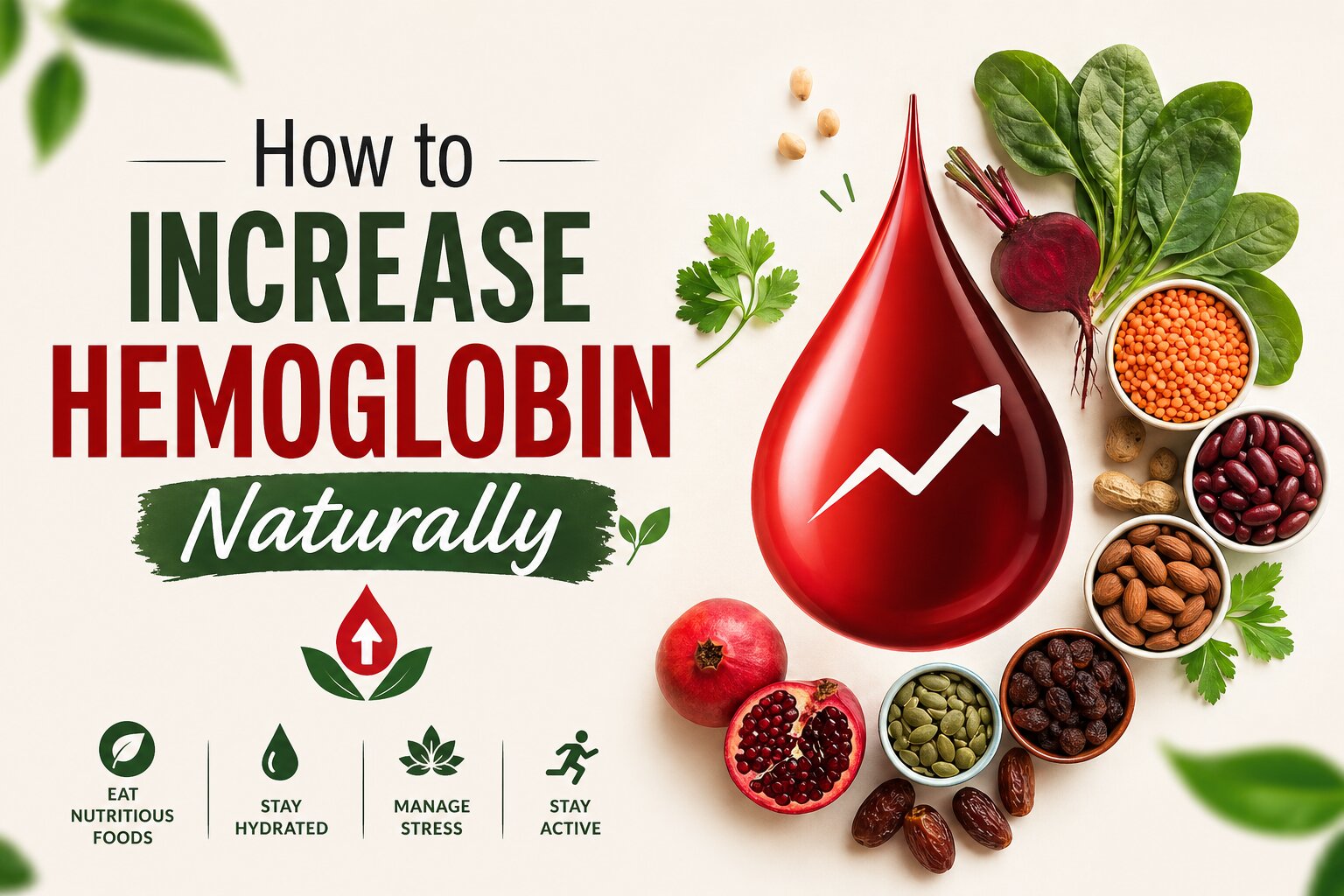
Best Hemoglobin Increase Food
| Food | Benefit |
|---|---|
| Spinach | Good plant iron source |
| Lentils | Iron + protein |
| Beetroot | Nutrient-rich |
| Dates | Iron + energy |
| Raisins | Helpful for mild deficiency |
| Pumpkin Seeds | Iron + zinc |
| Chickpeas | Iron + fiber |
| Jaggery | Traditional iron source |
Eat these regularly for natural improvement.
2. Improve Iron Absorption with Vitamin C
Many people eat iron-rich foods but still remain deficient because absorption is poor. Vitamin C helps convert iron into a form the body can absorb better.
Foods Rich in Vitamin C
- Lemon
- Orange
- Amla
- Guava
- Kiwi
- Tomatoes
- Bell peppers
Practical Tip
Add lemon to dal, salad, spinach, or sprouts meals. This simple habit can significantly help how to increase hemoglobin levels naturally.
3. Eat Beetroot Properly
Beetroot is one of the most searched foods for hemoglobin support. While it is not extremely high in iron, it contains folate, antioxidants, and nutrients that support blood health.
Ways to Consume Beetroot
- Fresh juice with carrot
- Boiled beetroot salad
- Beetroot paratha
- Smoothie with apple
Use 3–4 times weekly.
4. Use Dry Fruits for Daily Support
Dry fruits are nutrient dense and convenient.
Best Choices
- Dates
- Raisins
- Figs
- Apricots
Morning Routine
Soak raisins overnight and eat in the morning with dates. This supports energy and minerals.
5. Include Folate-Rich Foods
Folate helps in formation of red blood cells.
Foods Rich in Folate
- Avocado
- Spinach
- Beans
- Peanuts
- Broccoli
- Banana
Without enough folate, even iron-rich diets may not fully help.
6. Vitamin B12 Is Also Important
Some people keep taking iron but remain tired because their actual issue is B12 deficiency.
B12 Foods
- Eggs
- Milk
- Yogurt
- Fish
- Chicken
- Fortified cereals
Strict vegetarians may need supplements after testing.
7. Avoid Foods That Block Iron Absorption
This step is ignored by many people.
| Food / Drink | Why Avoid Near Meals |
|---|---|
| Tea | Reduces iron absorption |
| Coffee | Blocks absorption |
| Excess Calcium Supplements | May interfere |
| Cola Drinks | Poor nutrition |
| Junk Food | Low nutrients |
Best Tip: Avoid tea or coffee for 1 hour before and after iron-rich meals.
8. Improve Digestion and Gut Health
Healthy digestion is important for nutrient absorption.
Useful Habits
- Eat meals on time
- Chew properly
- Avoid overeating
- Reduce fried food
- Add curd or probiotics
- Stay hydrated
Even a perfect diet may fail if absorption is poor.
9. Exercise for Better Blood Health
Exercise improves circulation and oxygen usage.
Best Options
- Walking 30 minutes
- Light jogging
- Yoga
- Cycling
- Stretching
Sedentary lifestyle can worsen fatigue and poor stamina.
10. Sleep and Stress Management
Poor sleep and chronic stress can indirectly affect hormones, appetite, and recovery.
Aim For
- 7 to 8 hours sleep
- Fixed sleep timing
- Lower screen time before bed
- Relaxation practices
Sample Daily Diet Plan to Increase Hemoglobin Naturally
Morning
- Warm water with lemon
- 2 dates + soaked raisins
Breakfast
- Vegetable poha with peanuts
OR - Omelette + toast + fruit
Mid Morning
- Pomegranate or guava
Lunch
- Roti
- Dal
- Spinach sabzi
- Salad with lemon
Evening
- Beetroot-carrot juice
OR - Roasted chana
Dinner
- Rice or roti
- Lentils
- Vegetable curry
Bedtime
- Warm milk if suitable
How Long Does It Take to Increase Hemoglobin?
This depends on the cause and deficiency level.
| Severity | Approx Time |
|---|---|
| Mild Low Levels | 3–6 weeks |
| Moderate | 2–3 months |
| Severe | Needs medical treatment |
Natural improvement requires consistency.
Special Tips for Women
Women often face low hemoglobin due to menstruation or pregnancy.
Helpful Tips
- Increase iron during periods
- Track heavy bleeding
- Eat iron foods daily
- Prenatal care during pregnancy
- Check levels regularly
Special Tips for Men
Low hemoglobin in men may sometimes need medical investigation.
Helpful Tips
- Improve diet quality
- Reduce alcohol
- Check B12
- Rule out hidden bleeding if unexplained
- Exercise regularly
When to See a Doctor
Natural remedies are helpful, but medical attention is necessary if you have:
- Severe weakness
- Chest pain
- Very low energy
- Fainting
- Blood in stool
- Heavy periods
- Rapid weight loss
- Persistent breathlessness
You may need blood tests, supplements, or treatment.
Final Conclusion
If you are searching for how to increase hemoglobin naturally, focus on nutrition first. Iron, Vitamin C, folate, B12, good digestion, exercise, and sleep all play an important role. There is no magic single food, but consistent healthy habits can gradually improve levels.
Remember these key points:
- Eat iron-rich foods daily
- Add Vitamin C with meals
- Avoid tea after meals
- Use beetroot, spinach, lentils, dates, raisins
- Exercise regularly
- Get tested if symptoms continue
With patience and consistency, you can naturally support better hemoglobin levels and feel more energetic again.
Frequently Asked Questions
1. Which fruit is best for hemoglobin?
Pomegranate, guava, dates, raisins, and oranges are excellent choices.
2. Can beetroot raise hemoglobin quickly?
Beetroot supports health, but it works best with a complete iron-rich diet.
3. How to increase hemoglobin naturally in 1 week?
You can begin improvement with proper diet, hydration, and Vitamin C, but major increases usually take weeks.
4. Is jaggery good for low hemoglobin?
Yes, moderate use of jaggery may help as part of a balanced diet.
5. Does exercise help hemoglobin?
Yes, regular exercise improves circulation, stamina, and overall health.