





















Building a mobile application is a major investment for any business. Whether you are a startup planning to launch your first app or an established company looking to expand its digital presence, understanding the development cost is important before starting the project.
Flutter has become a popular choice for mobile app development because it allows developers to build applications for Android and iOS using a single codebase. This can help businesses save development time and manage their budgets more efficiently. However, the actual cost of building a Flutter application depends on several factors, including app complexity, design, features, integrations, and ongoing maintenance.
There is no fixed price for every project because each application has different requirements. A simple business app will generally cost less than an advanced application with payment gateways, real-time tracking, and custom functionality.
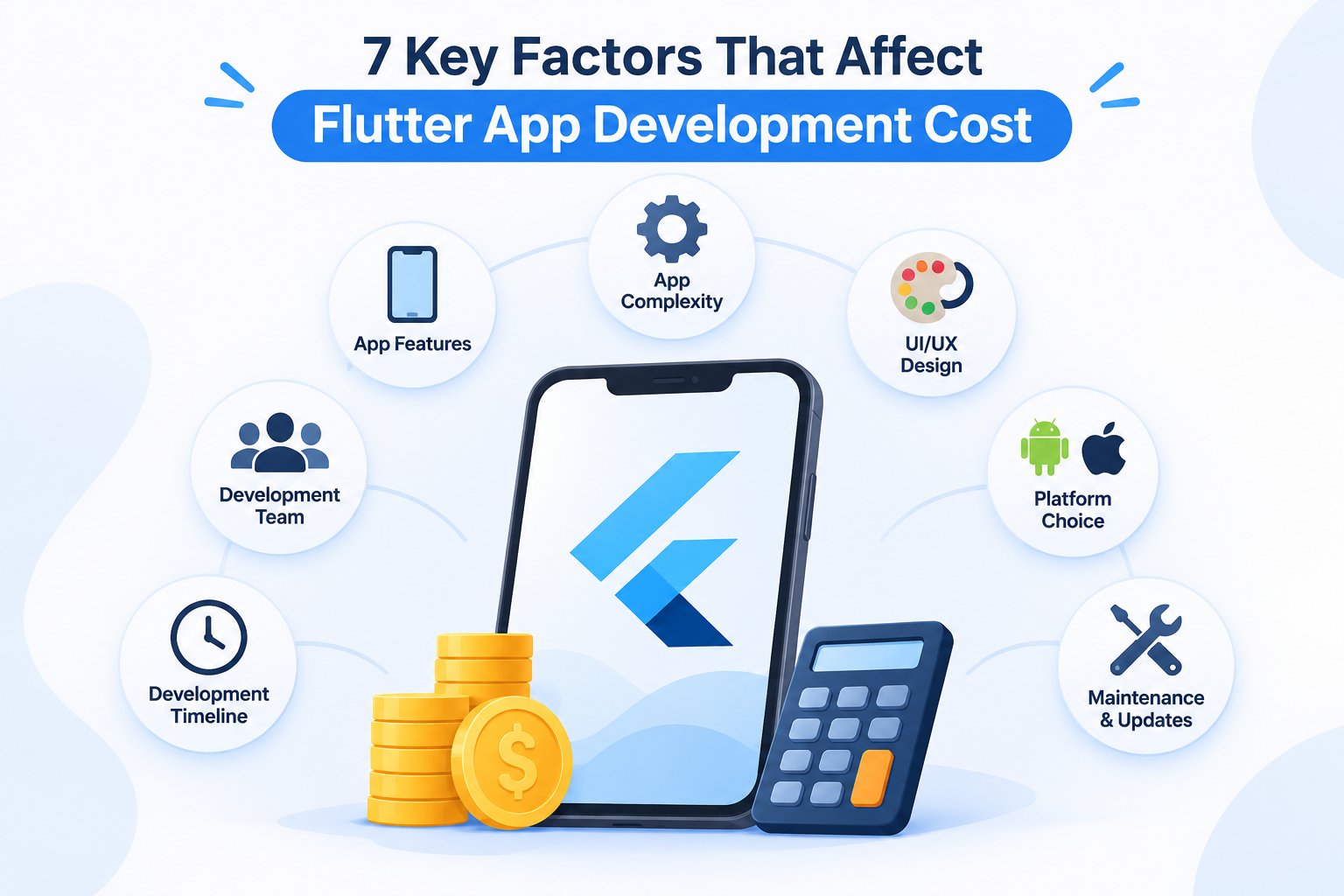
7 Important Factors That Influence Flutter App Development Cost
Let’s understand seven important factors that affect Flutter app development cost and what businesses should consider before starting their projects.
1. App Complexity and Features
App complexity is one of the biggest factors affecting the overall development cost. The number of features and the level of functionality required directly influence the time and effort needed to build an application. A basic application with a few screens and simple features will require less development work. On the other hand, an advanced application with multiple user roles, real-time updates, payment systems, and third-party integrations requires more planning and development.
For example, a basic company profile app may include:
- User registration and login.
- Home and about sections.
- Contact information.
- Basic navigation.
- Push notifications.
An advanced application may include online payments, live chat, GPS tracking, product recommendations, and booking systems. Businesses should identify their essential requirements before development begins. Starting with important features and adding more functionality later can help control the initial budget.
2. UI/UX Design and Customisation
The design of an application also plays an important role in determining its development cost. A simple design with standard layouts generally requires less time than a fully customised user interface. UI (User Interface) focuses on the visual appearance of the application, including colours, buttons, icons, typography, and screen layouts. UX (User Experience) focuses on how easily users can navigate the app and complete different tasks.
For example, an e-commerce application needs a clear product layout, simple search options, easy navigation, and a smooth checkout process. A healthcare application may require appointment booking screens, patient profiles, and organised information displays.
Custom animations, interactive elements, and unique screen designs can increase the design cost. However, investing in a good user experience can help improve customer satisfaction and encourage users to continue using the application. Businesses should discuss their design expectations with the development team before finalising the project budget.
3. Number of Platforms and Device Compatibility
Flutter allows developers to build applications for multiple platforms using a single codebase. This is one of the main reasons businesses choose it for mobile app development. However, the cost can still vary depending on the platforms you want to support and the additional requirements involved.
For example, launching an application on both Android and iOS may require additional testing, platform-specific adjustments, and device compatibility checks.
Some applications also need tablet support or integration with device features such as cameras, GPS, Bluetooth, and biometric authentication. A development team must ensure that the application works properly across different screen sizes, operating system versions, and devices. If you are planning to use flutter app development services, discuss your target platforms and device requirements early. This will help the development team estimate the project more accurately.
4. Backend Development and Third-Party Integrations
Many mobile applications require a backend system to manage user accounts, store information, process requests, and handle communication between the app and the server. The backend development cost depends on the application’s functionality and data requirements.
For example, an e-commerce app may need a backend to manage products, orders, customer details, inventory, and payments. A food delivery application may require restaurant management, delivery tracking, order updates, and customer notifications.
Third-party integrations can also affect the overall budget. These integrations connect the application with external services and allow it to perform additional functions.
Common examples include:
- Payment gateway integration.
- Google Maps and location services.
- Social media login.
- SMS and email notifications.
- Analytics and reporting tools.
- Cloud storage services.
More complex integrations may require additional development and testing. Therefore, businesses should finalise their integration requirements before development starts.
5. Developer Experience and Team Location
The experience of the development team is another important factor that affects Flutter app development pricing. Developers with strong technical knowledge and experience in handling complex projects may charge more than beginners. However, choosing a development partner only because of lower pricing can create problems later. An inexperienced team may take longer to complete the project or struggle with performance, security, and technical issues.
Businesses should compare development companies based on their previous projects, technical skills, client feedback, and communication process. When evaluating flutter application development services, check whether the team has experience with Flutter, Dart, API integration, backend technologies, and application testing.
The location of the development team can also influence pricing. Development rates may differ depending on the country, city, and company’s operating costs. It is important to choose a team that offers the right balance of technical expertise, project management, and pricing.
6. Testing, Security, and Quality Assurance
Testing is an important part of the app development process. It ensures that the application works correctly before it is released to users. A mobile app needs to be tested for functionality, performance, security, and compatibility. Skipping proper testing can lead to crashes, slow loading, payment errors, and other problems after launch. The testing requirements depend on the size and complexity of the application.
For example, an application that handles online payments needs additional testing to ensure that transactions are processed correctly. Similarly, an app that stores personal information needs proper security checks to protect user data.
Quality assurance may include:
- Functional testing.
- Performance testing.
- Device compatibility testing.
- Security testing.
- User experience testing.
- Bug fixing and retesting.
A reliable development team includes testing as part of the project instead of treating it as an optional activity. Although quality assurance adds to the initial development effort, it can help prevent expensive issues in the future.
7. App Maintenance and Future Updates
The development cost does not end when the application is launched. Mobile applications require regular maintenance to remain secure, stable, and compatible with updated operating systems. After launch, businesses may need bug fixes, performance improvements, security updates, and new features based on customer feedback.
For example, an online shopping application may initially launch with basic shopping and payment features. As the business grows, it may need additional payment options, loyalty programmes, advanced search filters, and personalised recommendations.
These improvements require additional development work and should be considered while planning the overall budget. Before hiring a flutter mobile app development company, ask about its post-launch support, maintenance plans, and charges for future updates. Having a clear maintenance plan helps businesses manage long-term expenses and keep their applications running smoothly.
How to Manage Your Flutter App Development Budget?
Understanding the factors that affect development costs can help businesses make better decisions. Before starting a project, prepare a list of essential features, define your target audience, and set a realistic budget. If you are searching for a mobile app development company in noida, compare different development teams based on their experience, portfolio, technology expertise, and pricing structure.
You should also request a detailed project estimate that covers design, development, testing, integrations, and post-launch support. Starting with a Minimum Viable Product (MVP) is another practical way to manage expenses. It allows businesses to launch an application with essential features, collect user feedback, and introduce additional functionality as the business grows. Avoid adding unnecessary features at the beginning. Focus on building an application that solves your customers’ problems and supports your business objectives.
Final Thoughts
Flutter app development cost depends on several factors, including application complexity, design requirements, platform compatibility, backend development, team experience, testing, and maintenance. There is no single price that works for every project. The final budget depends on what you want to build and how much functionality your application requires.
Before selecting a development partner, take time to understand your project requirements and compare different service providers. A reliable team will help you choose the right technologies, plan your budget, and develop an application that can grow with your business. With proper planning and the right development approach, businesses can build high-quality Flutter applications while keeping development expenses under control.
Frequently Asked Questions (FAQs)
What factors affect Flutter app development cost the most?
The main factors include app complexity, number of features, UI/UX design, backend development, third-party integrations, developer experience, testing, and maintenance. Applications with advanced functionality generally require more development time and a higher budget.
Is Flutter app development cheaper than native app development?
Flutter can be more cost-effective because developers can use a single codebase for Android and iOS applications. This can reduce duplicated development work. However, the actual savings depend on the app’s features, platform-specific requirements, and project complexity.
How long does it take to develop a Flutter mobile app?
The development timeline depends on the application’s requirements. A simple app may take a few weeks, while a feature-rich application can take several months. Design, integrations, testing, and client feedback can also affect the timeline.
Does Flutter app development include backend development?
Not always. Flutter is mainly used to build the application’s front end. Applications that require user accounts, databases, payment processing, or server-side functionality may need separate backend development. The backend requirements should be included in the project estimate.
Is Flutter suitable for developing business applications?
Yes. Flutter is suitable for many business applications, including e-commerce platforms, healthcare apps, education apps, booking systems, and service-based applications. It supports cross-platform development and offers a flexible approach for building applications for different business needs.