























Mobile phones have quietly become the control center for almost everything we do — shopping, banking, ordering food, booking cabs, learning new skills, and staying connected with the world. Behind every app that makes these everyday actions effortless is a structured discipline called mobile app development. If you’re a business owner, entrepreneur, or startup founder wondering what mobile app development actually involves, why it matters, and how the process works, this guide breaks it all down in simple, practical terms.
What Is Mobile App Development?
Mobile app development is the process of creating software applications that run on mobile devices such as smartphones and tablets. It involves everything from ideation, design, and coding to testing, deployment, and ongoing maintenance. Unlike traditional desktop software, mobile apps are built to take advantage of device-specific features like GPS, cameras, push notifications, touch gestures, and offline storage.
Mobile apps generally fall into three categories:
- Native apps – built specifically for one platform (iOS or Android) using languages like Swift, Kotlin, or Java.
- Cross-platform apps – built once using frameworks like Flutter or React Native and deployed across both iOS and Android.
- Hybrid apps – web-based apps wrapped inside a native shell, offering a middle ground between native and web development.
Each approach has its own trade-offs in terms of performance, cost, and development speed, and the right choice depends on your business goals, budget, and target audience.
Key Features of a Successful Mobile App
Not every app succeeds — the difference often lies in the features baked into the product from day one. Some features that separate a great app from an average one include:
- Intuitive UI/UX design that makes navigation effortless
- Fast load times and smooth performance under real-world network conditions
- Offline functionality for uninterrupted use
- Push notifications to boost engagement and retention
- Secure authentication including biometric login and OTP verification
- Third-party integrations such as payment gateways, maps, and social logins
- Analytics dashboards to track user behavior and app performance
- Scalability to handle growing user bases without performance drops
A well-planned feature set doesn’t just improve user experience — it directly impacts app store ratings, retention rates, and ultimately, revenue.
Benefits of Mobile App Development for Businesses
Investing in a mobile app isn’t just a trend — it’s become a business necessity across nearly every industry. Here’s why:
1. Direct channel to customers: Apps give businesses a direct line of communication through push notifications and in-app messaging, without relying on algorithms or ad spend.
2. Improved customer engagement: Personalized experiences, loyalty programs, and easy reordering keep users coming back.
3. Increased brand visibility: An app icon on a customer’s home screen is a constant, low-cost brand reminder.
4. Better data collection: Apps allow businesses to gather detailed insights into user preferences and behavior, enabling smarter decisions.
5. Competitive advantage: In many industries, having a mobile app is now table stakes — its absence can push customers toward competitors who offer one.
6. New revenue streams: From in-app purchases to subscription models, apps open doors to monetization that websites often can’t match.
Why Businesses Are Choosing Local Development Partners
While outsourcing app development overseas may seem cost-effective on paper, many businesses are realizing the value of working with a team that understands their local market, language, and user behavior firsthand. This is especially true for companies targeting audiences in India, where regional nuances in payment preferences, language, and app usage patterns can make or break an app’s success. Partnering with an established mobile app development company in Delhi gives businesses the advantage of face-to-face collaboration, faster turnaround on revisions, and a development team that already understands the local digital ecosystem, compliance requirements, and user expectations — all of which can significantly shorten the path from idea to a polished, market-ready app.
The Mobile App Development Process
Understanding the typical development lifecycle helps set realistic expectations for timelines, costs, and outcomes. Most reliable development partners, including a skilled ecommerce mobile app development company, follow a structured process like this:
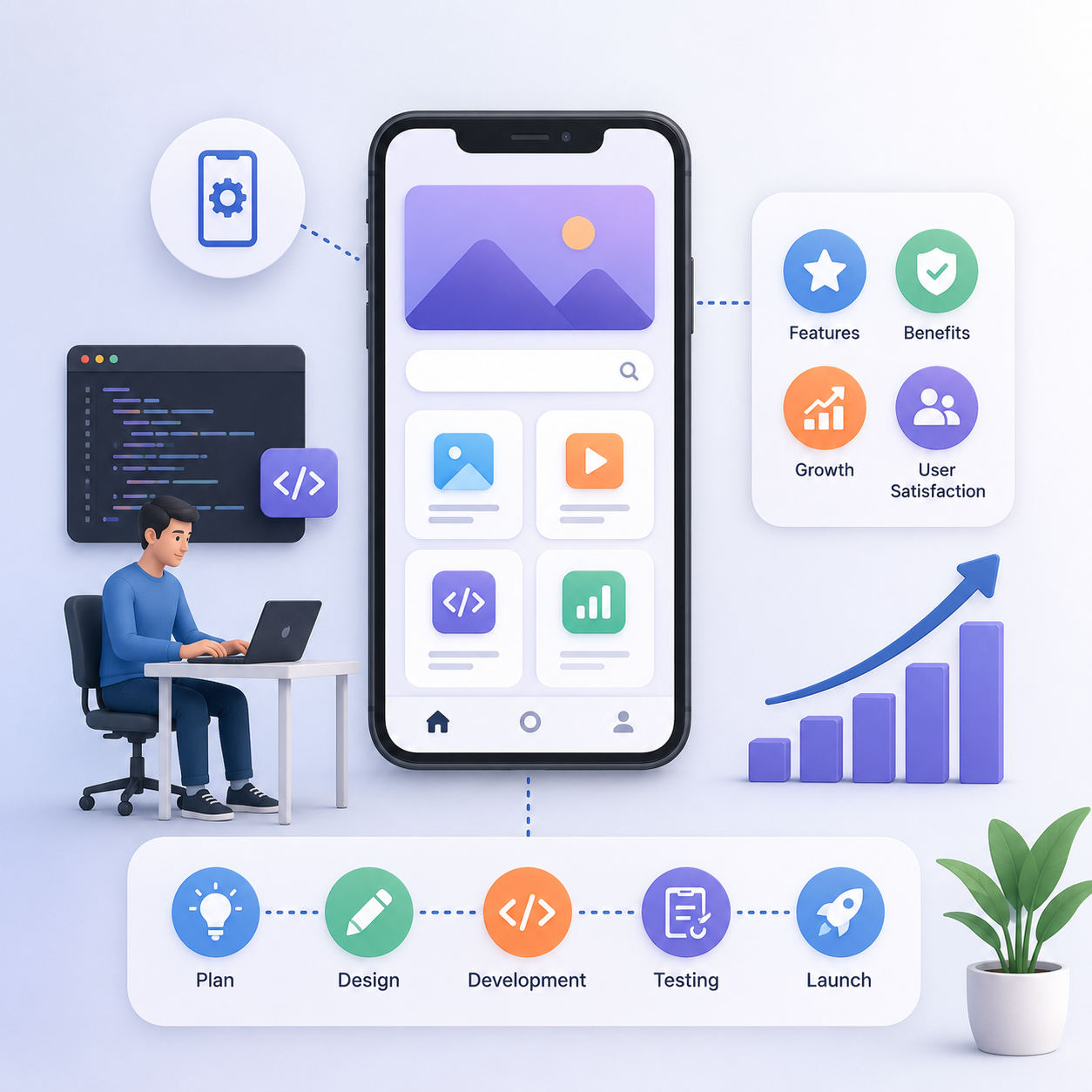
1. Discovery & Planning This stage involves defining the app’s purpose, target audience, core features, and competitive positioning. A clear product roadmap is created here.
2. UI/UX Design Wireframes and prototypes are built to map out user flows before any code is written, ensuring the app is intuitive from the first tap.
3. Development Front-end and back-end development happen in parallel — the front-end handles what users see, while the back-end manages databases, servers, and APIs.
4. Testing & QA Rigorous testing across devices, screen sizes, and operating systems ensures the app performs reliably and is free of critical bugs.
5. Deployment The app is submitted to the Apple App Store and/or Google Play Store, following each platform’s specific guidelines.
6. Maintenance & Updates Post-launch, apps require regular updates to fix bugs, patch security vulnerabilities, and add new features based on user feedback.
Ecommerce Apps: A Category of Their Own
Ecommerce mobile apps deserve special mention because they carry unique technical and business requirements that go beyond a typical informational or utility app. Product catalogs, inventory syncing, secure payment gateways, cart abandonment recovery, real-time order tracking, and personalized recommendations all need to work together seamlessly. Choosing a specialized ecommerce mobile app development company ensures these moving parts are handled by a team experienced in the specific challenges of online retail — from handling high traffic during sales events to integrating with existing ERP or inventory management systems.
Choosing the Right Development Partner for Your Ecommerce App
Not all development teams are equipped to build high-performing shopping apps. When evaluating an ecommerce mobile app development company, look for a portfolio of live ecommerce apps, experience with payment gateway integrations, familiarity with inventory and order management systems, and a proven ability to optimize for conversions rather than just aesthetics. Ask potential partners how they approach performance under peak load, since a shopping app that crashes during a flash sale can cost far more in lost revenue than the development itself.
Cost Factors to Consider
The cost of building a mobile app varies widely based on complexity, platform choice, and feature set. Key cost drivers include:
- Number of platforms (iOS, Android, or both)
- Complexity of features (basic CRUD apps vs. apps with AI, AR, or real-time syncing)
- Design requirements (standard templates vs. fully custom UI)
- Backend infrastructure needs
- Third-party integrations (payment gateways, CRMs, analytics tools)
- Ongoing maintenance and support
For businesses building shopping platforms, working with a transparent ecommerce app development company from the start helps avoid unexpected costs later, since ecommerce-specific requirements like payment security compliance and scalable backend architecture are factored into the estimate upfront rather than discovered mid-project.
Future Trends Shaping Mobile App Development
The mobile app landscape keeps evolving, and businesses building apps today should keep an eye on:
- AI-powered personalization for recommendations and customer support chatbots
- 5G-enabled features like richer AR/VR experiences and faster streaming
- Super apps that combine multiple services (payments, shopping, messaging) into one platform
- Voice search and voice commerce integration
- Enhanced app security driven by growing data privacy regulations
Businesses partnering with a forward-thinking mobile app development company are better positioned to adopt these trends early, staying ahead of competitors who treat their apps as static, one-time projects rather than evolving digital products.
Final Thoughts
Mobile app development is no longer optional for businesses that want to stay relevant and competitive. Whether you’re building a simple utility app or a full-featured ecommerce platform, success depends on clear planning, the right feature set, and a development partner who understands both the technical and business sides of the process. Taking the time to choose the right team — one with proven experience and a track record of delivering results — can be the single biggest factor in whether your app thrives or gets lost among millions of others in the app stores.