

























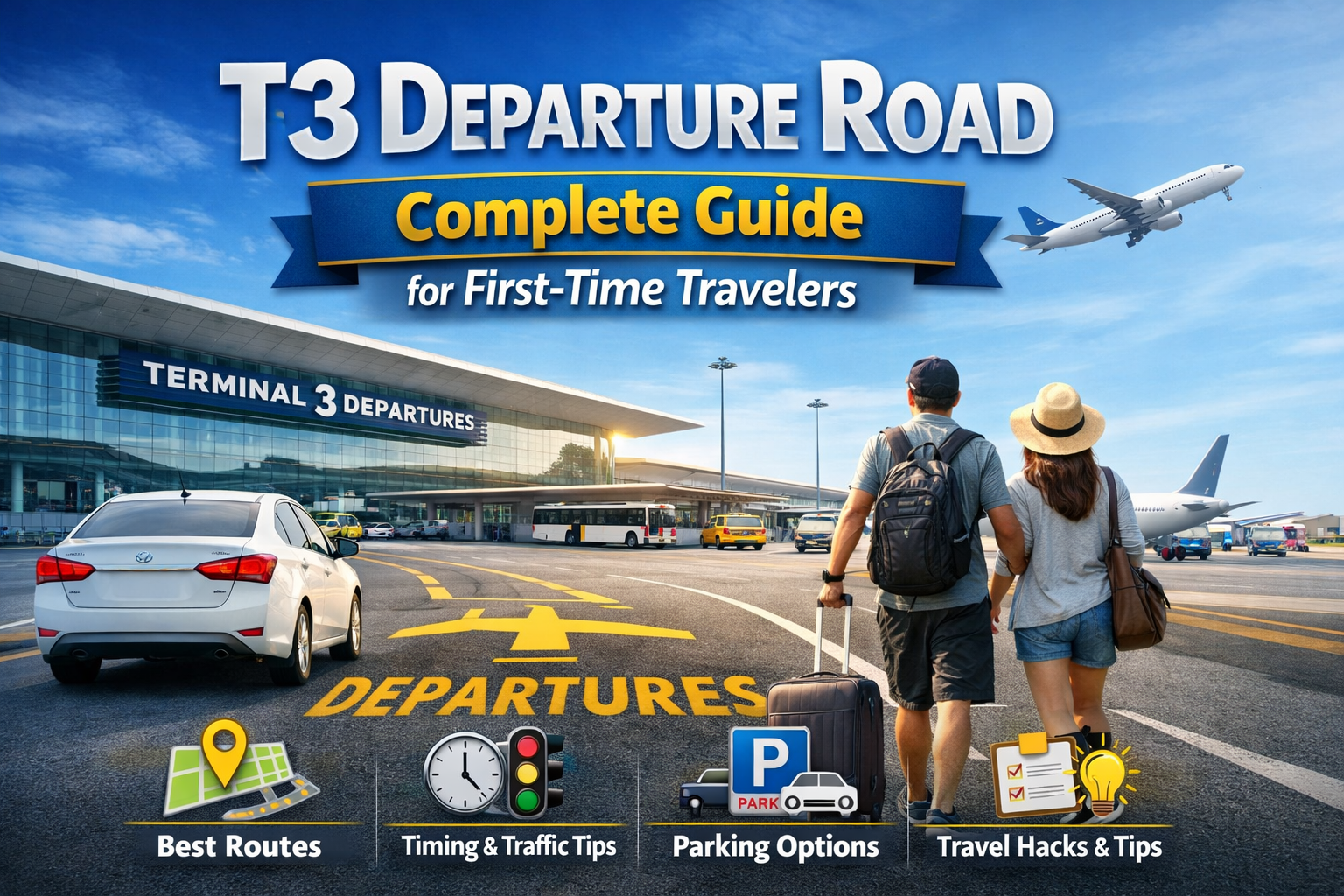
Traveling to an international airport for the first time can feel overwhelming, especially when navigating T3 Departure Road, one of the busiest and most important access routes to Terminal 3. However, with the right planning and a clear understanding of routes, timings, and facilities, your journey can be smooth, confident, and stress-free.
This power-packed guide is designed specifically for first-time travelers, families, business flyers, and even frequent passengers who want a smarter approach. We’ll walk you through everything—routes, parking, traffic patterns, insider tips, and common mistakes—using simple language and practical advice. Let’s dive in and make your departure day hassle-free.
What Is T3 Departure Road?
T3 Departure Road is the designated access road leading directly to Terminal 3 departures, primarily used by international and select domestic flights. This road is carefully designed to manage heavy traffic while ensuring timely passenger drop-offs right outside the departure gates.
What makes T3 Departure Road unique is its segmented lanes, strict security monitoring, and time-bound vehicle access. Unlike regular city roads, this route operates under airport authority regulations, meaning lane discipline, speed limits, and stopping rules are strictly enforced. For first-time travelers, understanding this road is crucial because a wrong turn or delay here can easily add 20–30 minutes to your journey. The good news? Once you know the system, it’s actually very efficient.
Why T3 Departure Road Is So Important (5 Powerful Reasons)
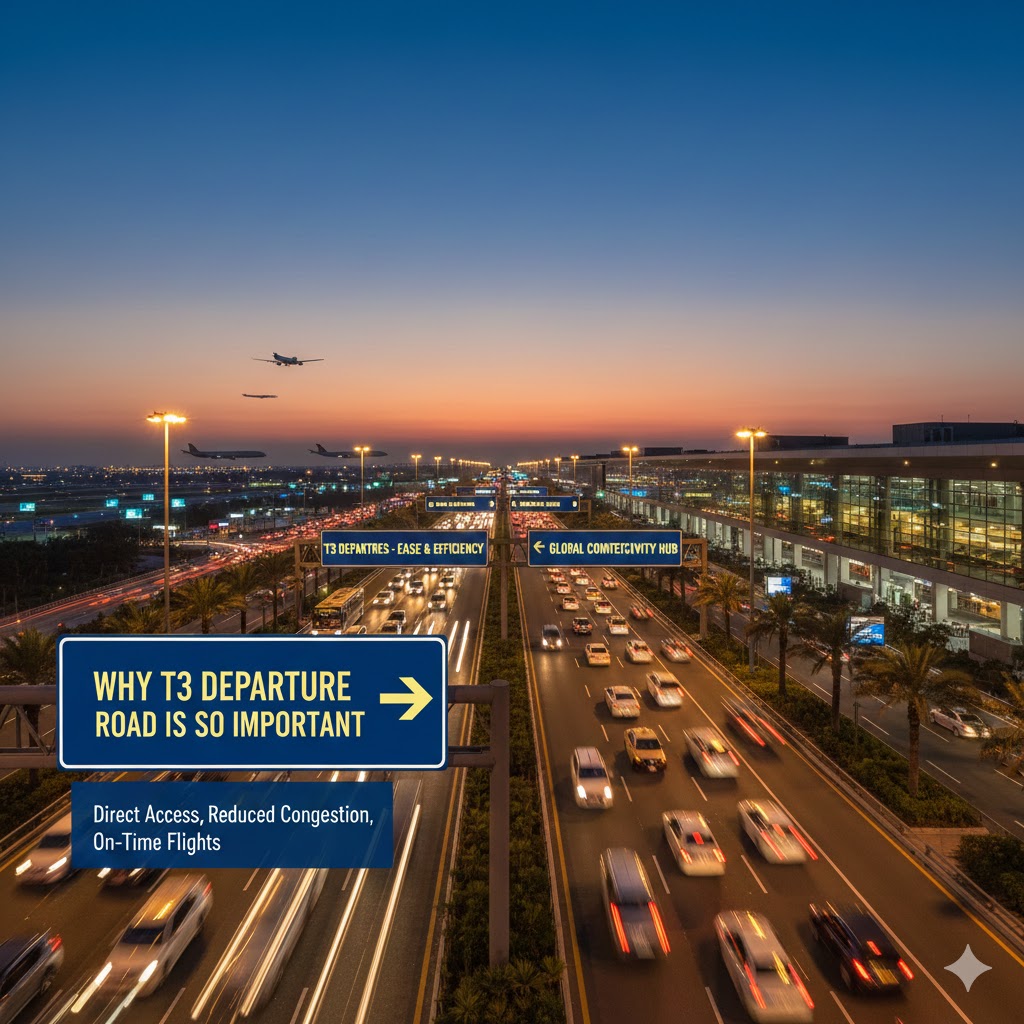
T3 Departure Road isn’t just another airport road—it’s the final gateway to your flight. Here’s why it matters so much:
- Direct Terminal Access – No unnecessary loops or internal transfers.
- Time-Sensitive Zone – Vehicles are allowed only for quick drop-offs.
- Security-Controlled Entry – Ensures passenger safety.
- Optimized Traffic Flow – Reduces congestion during peak hours.
- Clear Signage System – Helps even first-time drivers navigate confidently.
Because this road handles thousands of passengers daily, even small delays can snowball. Planning ahead is not optional—it’s essential.
Major Routes & Connectivity to T3 Departure Road
T3 Departure Road is well-connected with major highways and city arteries, making it accessible from almost every part of the city.
Primary Access Routes
- National highways connecting business districts
- Dedicated airport express roads
- City arterial roads linked via flyovers
Connectivity Highlights
- Seamless integration with airport infrastructure
- Separate lanes for private cars, taxis, and buses
- Digital signboards guiding real-time traffic updates
T3 Departure Road Route Table
| Starting Point | Recommended Route | Average Time | Notes |
|---|---|---|---|
| City Center | Airport Expressway | 30–45 mins | Fastest |
| Business Hub | Ring Road → Airport Link | 40–60 mins | Moderate traffic |
| Suburban Area | NH Access → Terminal Road | 60–90 mins | Plan buffer |
Best Time to Use T3 Departure Road (Smart Timing Strategy)
Timing can make or break your airport experience. While T3 Departure Road operates 24/7, traffic intensity varies significantly.
Ideal Time Windows
- Early Morning (4 AM – 7 AM): Least congestion, smooth entry
- Late Night (10 PM – 1 AM): Faster security movement
Peak Hours to Avoid
- Morning rush (8 AM – 11 AM)
- Evening business traffic (5 PM – 8 PM)
Always plan to reach the terminal at least 3–4 hours before international departures, factoring in road delays.
Traffic Patterns & Peak Hour Reality Check
Traffic on T3 Departure Road isn’t random—it follows predictable patterns influenced by office hours, flight schedules, and weather conditions.
- Weekdays: Heavier during office hours
- Weekends: Afternoon congestion due to leisure travel
- Festive Seasons: Expect longer queues and stricter checks
Using live navigation apps and airport traffic advisories can help you adjust routes in real time.
Parking Options Near T3 Departure Road
If you’re not opting for a quick drop-off, parking planning becomes crucial.
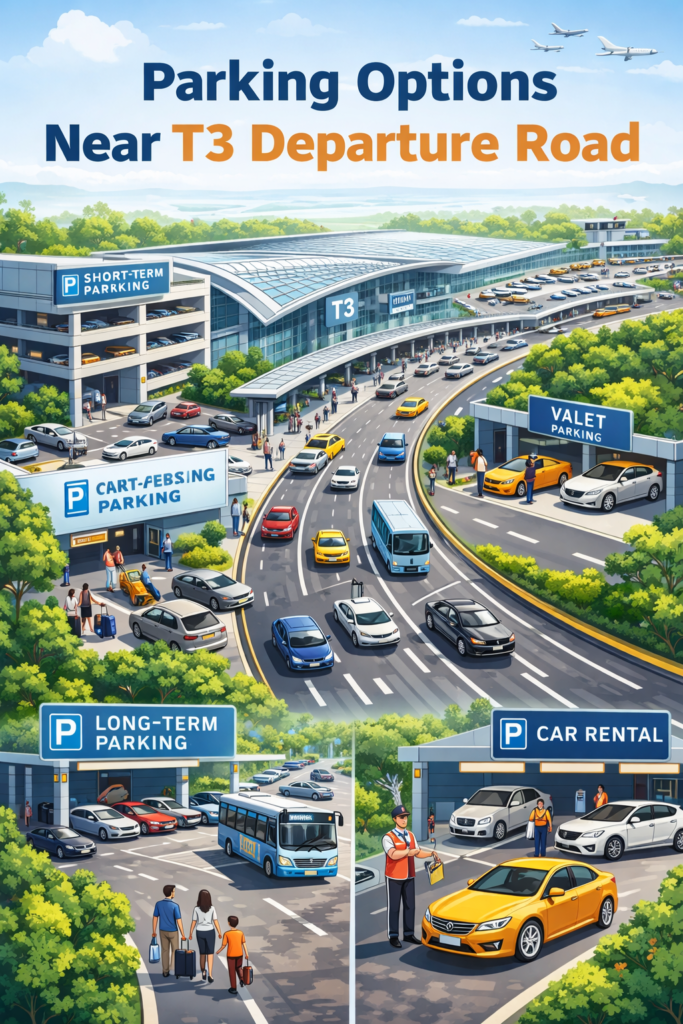
Types of Parking Available
- Short-term parking (ideal for drop-offs)
- Long-term parking (for extended trips)
- Premium valet services
Parking Comparison Table
| Parking Type | Distance from T3 | Cost Range | Best For |
|---|---|---|---|
| Short-Term | Walking distance | Medium | Quick visits |
| Long-Term | Shuttle-based | Low | Long trips |
| Valet | Terminal entry | High | Convenience |
Public Transport & Cab Access (Budget-Friendly Options)
Not everyone drives, and that’s perfectly fine. T3 Departure Road is fully integrated with public transport systems.
- App-based cabs with designated drop zones
- Airport shuttle buses
- Metro connectivity (last-mile via shuttle)
For official airport transport details, you can refer to the airport authority’s official website (example: https://www.aai.aero/en).
Step-by-Step Guide for First-Time Travelers (Zero Confusion Plan)
- Confirm your terminal (T3) on the ticket
- Start early with a 30–45 min buffer
- Follow airport signage, not just GPS
- Keep ID and ticket handy at entry checkpoints
- Use drop-off zone efficiently (no waiting)
This systematic approach eliminates panic and last-minute rushing.
Safety Rules & Airport Regulations You Must Know
Airport authorities enforce strict rules on T3 Departure Road:
- No prolonged parking
- No unauthorized stops
- Speed limits are monitored
- Security checks are mandatory
Breaking these rules can result in fines or forced vehicle removal.
Expert Tips to Save Time, Money & Stress
- Travel light to reduce unloading time
- Screenshot terminal maps beforehand
- Use off-peak hours whenever possible
- Choose experienced airport cab drivers
- Keep digital documents accessible
These small habits can save you 30–60 minutes easily.
Common Mistakes First-Time Travelers Make (Avoid These!)
- Reaching the wrong terminal
- Underestimating traffic delays
- Stopping too long at drop zones
- Relying only on GPS voice commands
Learning from others’ mistakes helps you travel smarter.
Conclusion: Travel Confidently on T3 Departure Road
Navigating T3 Departure Road doesn’t have to be stressful. With the right knowledge, smart timing, and a calm mindset, even first-time travelers can enjoy a smooth and efficient airport experience. Preparation is your biggest ally—use this guide, plan ahead, and travel with confidence.
Safe travels and happy flying ✈️
Frequently Asked Questions
1. Is T3 Departure Road open 24/7?
Yes, T3 Departure Road operates 24/7 for passenger drop-offs. However, traffic volume varies by time of day. Early mornings and late nights usually have smoother access, while mornings and evenings experience higher congestion due to flight schedules.
2. How early should I reach T3 using T3 Departure Road?
Passengers should reach T3 via T3 Departure Road at least 3–4 hours before international flights. This buffer allows enough time for traffic delays, security checks, and airport entry formalities, ensuring a stress-free departure experience.
3. Can private vehicles use T3 Departure Road?
Yes, private cars are allowed on T3 Departure Road for quick passenger drop-offs. Vehicles must follow lane discipline and exit promptly, as waiting or parking is not permitted under airport traffic regulations.
4. Is parking allowed on T3 Departure Road?
No, parking is strictly not allowed on T3 Departure Road. The road is designed only for active drop-offs. For parking, travelers must use designated short-term or long-term parking facilities located near Terminal 3.
5. Are taxis and app-based cabs allowed on T3 Departure Road?
Yes, app-based cabs and airport-authorized taxis can access T3 Departure Road. They have designated drop-off zones near departure gates, making them a convenient and reliable option for first-time and frequent travelers.
6. What happens if a vehicle overstays on T3 Departure Road?
If a vehicle overstays, airport authorities may impose fines or direct the vehicle to exit immediately. Prolonged stopping can disrupt traffic flow and may lead to penalties or towing in high-security situations.